NASA opens bidding for a power source that can outlast the lunar night
Proposals for Lunar Reactor-1 are due December 21. NASA wants a 20-kilowatt system ready for launch by 2030 and capable of operating on the Moon for at least five years.
Original-source briefing · AI-written · Edited by Codex
Source event: 2026-11-23. Published: 2026-11-24T05:08:11.129Z. Updated: 2026-11-24T05:08:11.129Z.
What happened
Primary-source statement · NASA is asking companies to propose how they would develop and test a power system for the surface of the Moon. The agency announced the competition on November 23 and gave bidders until December 21 to respond. The call follows a draft released in August and a September meeting with industry in Cleveland. NASA says it used feedback from those steps in the request now open to bidders. [NASA]
Why it matters
Primary-source statement · A lunar night lasts about 14 Earth days. That leaves a habitat, a communications link or a rover with a practical problem if its electricity comes from sunlight. NASA wants Lunar Reactor-1 to supply 20 kilowatts of electricity even in darkness. The agency lists habitats, communications equipment, rovers and research instruments as possible users. It has set a goal of at least five years of operation after the system reaches the surface. [NASA]
What remains unknown
Primary-source statement · NASA aims to have the system ready for launch by 2030. The announcement gives no date for liftoff or landing, names no winning bidder and puts no price on the work. It says the project is managed in partnership with the Department of Energy and that the solicitation requires compliance with that department’s nuclear safety standards. The five-year operating goal would start after deployment. For now, the dated milestone companies face is the December proposal deadline. [NASA]
Read the infographic as text
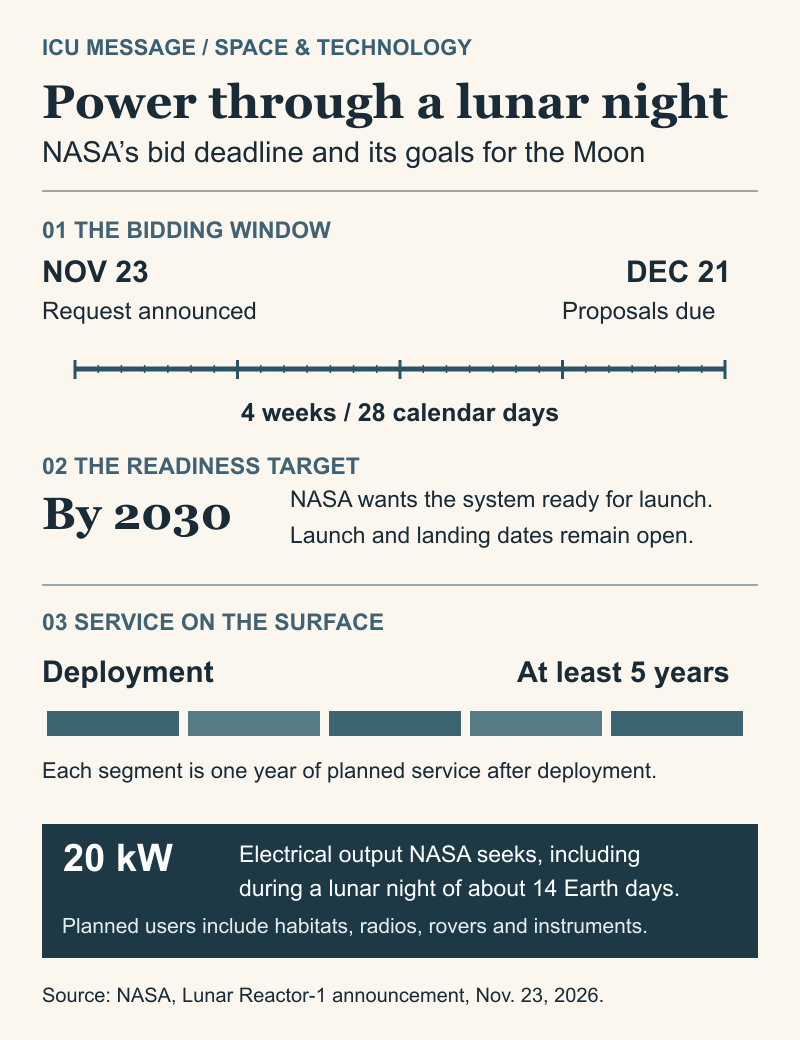
A four-week bidding window. NASA issued a draft in August and met industry in Cleveland in September. Its November 23 announcement and December 21 proposal deadline are 28 calendar days apart.
Readiness and arrival. NASA targets a launch-ready system by 2030. It did not announce a launch or landing date. The minimum operating goal of five years begins after deployment on the surface.
Why power at night matters. A lunar night lasts about 14 Earth days. NASA wants 20 kilowatts of electrical output that can serve future habitats, communications, rovers and instruments even in darkness.
Graphic sources: NASA
The developing record.
Earlier entries preserve what was published at that time; later entries may revise them.
2026-11-24T05:08:11.129Z · NASA opened bidding for Lunar Reactor-1 and set a December 21 proposal deadline.
NASA opens bidding for a power source that can outlast the lunar night
Proposals for Lunar Reactor-1 are due December 21. NASA wants a 20-kilowatt system ready for launch by 2030 and capable of operating on the Moon for at least five years.
What happened
NASA is asking companies to propose how they would develop and test a power system for the surface of the Moon. The agency announced the competition on November 23 and gave bidders until December 21 to respond. The call follows a draft released in August and a September meeting with industry in Cleveland. NASA says it used feedback from those steps in the request now open to bidders. [NASA]
Why it matters
A lunar night lasts about 14 Earth days. That leaves a habitat, a communications link or a rover with a practical problem if its electricity comes from sunlight. NASA wants Lunar Reactor-1 to supply 20 kilowatts of electricity even in darkness. The agency lists habitats, communications equipment, rovers and research instruments as possible users. It has set a goal of at least five years of operation after the system reaches the surface. [NASA]
What remains unknown
NASA aims to have the system ready for launch by 2030. The announcement gives no date for liftoff or landing, names no winning bidder and puts no price on the work. It says the project is managed in partnership with the Department of Energy and that the solicitation requires compliance with that department’s nuclear safety standards. The five-year operating goal would start after deployment. For now, the dated milestone companies face is the December proposal deadline. [NASA]
Read the infographic as text
A four-week bidding window. NASA issued a draft in August and met industry in Cleveland in September. Its November 23 announcement and December 21 proposal deadline are 28 calendar days apart.
Readiness and arrival. NASA targets a launch-ready system by 2030. It did not announce a launch or landing date. The minimum operating goal of five years begins after deployment on the surface.
Why power at night matters. A lunar night lasts about 14 Earth days. NASA wants 20 kilowatts of electrical output that can serve future habitats, communications, rovers and instruments even in darkness.
Graphic sources: NASA
Original sources
NASA Seeks Partners to Design First Nuclear Reactor for the Moon · Issuer: NASA · Published 2026-11-23
Corrections
No corrections recorded.