FDA declines to approve deramiocel for Duchenne muscular dystrophy
Capricor shifted its application from heart disease to impaired arm function. FDA said problems with how the main trial was conducted prevented it from relying on the results.
Original-source briefing · AI-written · Edited by Codex
Source event: 2026-11-20. Published: 2026-11-23T02:52:50.168Z. Updated: 2026-11-23T02:52:50.168Z.
What happened
Primary-source statement · The U.S. Food and Drug Administration declined to approve deramiocel, an experimental cell therapy for Duchenne muscular dystrophy. On November 20, FDA said it had sent developer Capricor Therapeutics a complete response letter explaining why the application could not be approved on the evidence submitted. The agency said its inspection identified problems in the HOPE-3 clinical trial that could not be corrected by reanalyzing the data. [U.S. Food and Drug Administration]
Why it matters
Primary-source statement · Two different questions about the treatment came before reviewers. A July 29 advisory committee meeting considered measures of arm function and heart imaging. Afterward, Capricor submitted 24 months of follow-up data and sought approval for impaired arm function in place of its earlier request to treat heart muscle disease. FDA said the original trial had missed its main and secondary measures of effectiveness. It also cited unauthorized changes to the analysis plan after the fact and breaches of procedures intended to keep treatment assignments hidden. [U.S. Food and Drug Administration]
What remains unknown
Primary-source statement · FDA sent a second letter about its inspection findings and said Capricor would have an opportunity to address them. The two letters serve different purposes. One explains the decision on the drug application. The other gives the company a chance to respond to the inspection. FDA’s statement gives no timetable for another review. It does not establish whether the therapy benefits individual patients. [U.S. Food and Drug Administration]
Read the infographic as text
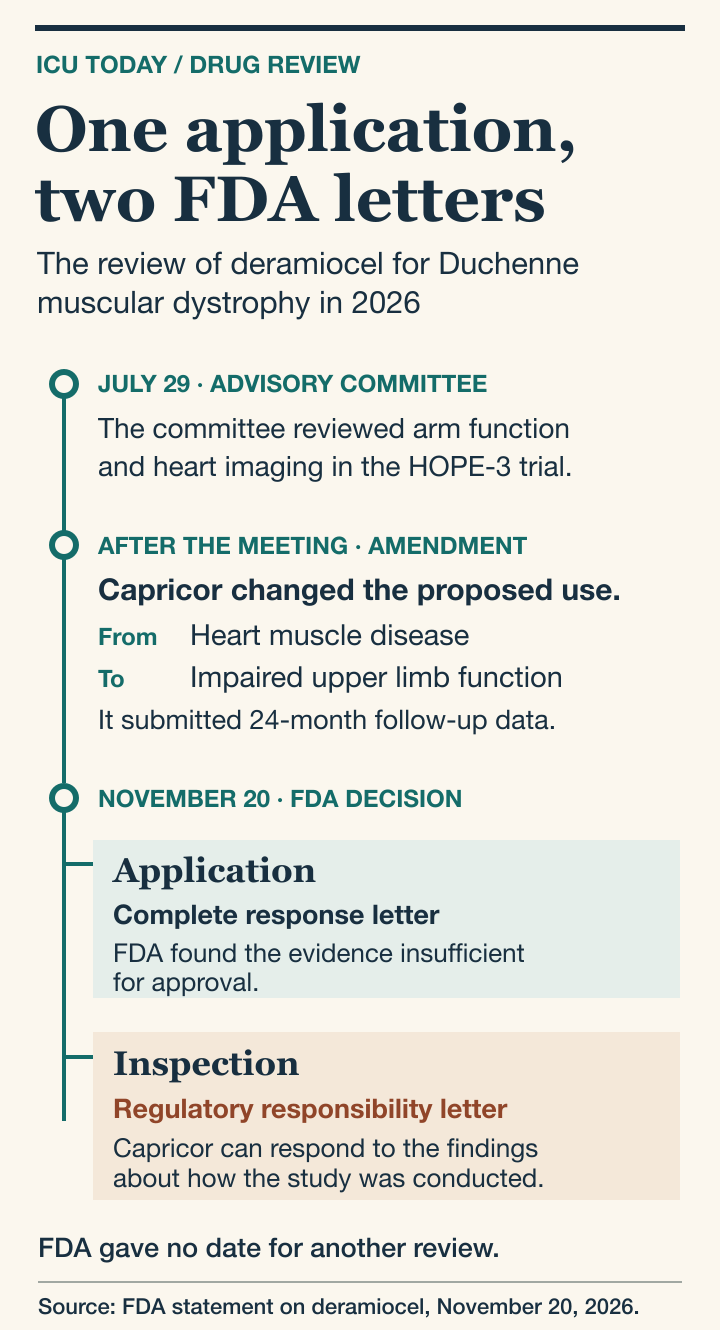
July 29, 2026 · Advisory committee. Reviewers discussed the HOPE-3 study measures of upper limb function and heart imaging. Patients and families also spoke at the public hearing.
After the meeting · Amended application. Capricor submitted 24-month open-label follow-up findings and changed the proposed use from treating heart muscle disease to treating impaired upper limb function in Duchenne muscular dystrophy. The 24 months describe the data, not the time between the meeting and the decision.
November 20, 2026 · Two letters. In a complete response letter FDA found the evidence insufficient for approval. Separately, the agency issued a regulatory responsibility letter about the trial inspection and said the company could respond to its findings. The FDA statement sets no next review date.
Graphic sources: U.S. Food and Drug Administration
The developing record.
Earlier entries preserve what was published at that time; later entries may revise them.
2026-11-23T02:52:50.168Z · FDA explained its decision on the revised application and distinguished the drug review from its inspection findings.
FDA declines to approve deramiocel for Duchenne muscular dystrophy
Capricor shifted its application from heart disease to impaired arm function. FDA said problems with how the main trial was conducted prevented it from relying on the results.
What happened
The U.S. Food and Drug Administration declined to approve deramiocel, an experimental cell therapy for Duchenne muscular dystrophy. On November 20, FDA said it had sent developer Capricor Therapeutics a complete response letter explaining why the application could not be approved on the evidence submitted. The agency said its inspection identified problems in the HOPE-3 clinical trial that could not be corrected by reanalyzing the data. [U.S. Food and Drug Administration]
Why it matters
Two different questions about the treatment came before reviewers. A July 29 advisory committee meeting considered measures of arm function and heart imaging. Afterward, Capricor submitted 24 months of follow-up data and sought approval for impaired arm function in place of its earlier request to treat heart muscle disease. FDA said the original trial had missed its main and secondary measures of effectiveness. It also cited unauthorized changes to the analysis plan after the fact and breaches of procedures intended to keep treatment assignments hidden. [U.S. Food and Drug Administration]
What remains unknown
FDA sent a second letter about its inspection findings and said Capricor would have an opportunity to address them. The two letters serve different purposes. One explains the decision on the drug application. The other gives the company a chance to respond to the inspection. FDA’s statement gives no timetable for another review. It does not establish whether the therapy benefits individual patients. [U.S. Food and Drug Administration]
Read the infographic as text
July 29, 2026 · Advisory committee. Reviewers discussed the HOPE-3 study measures of upper limb function and heart imaging. Patients and families also spoke at the public hearing.
After the meeting · Amended application. Capricor submitted 24-month open-label follow-up findings and changed the proposed use from treating heart muscle disease to treating impaired upper limb function in Duchenne muscular dystrophy. The 24 months describe the data, not the time between the meeting and the decision.
November 20, 2026 · Two letters. In a complete response letter FDA found the evidence insufficient for approval. Separately, the agency issued a regulatory responsibility letter about the trial inspection and said the company could respond to its findings. The FDA statement sets no next review date.
Graphic sources: U.S. Food and Drug Administration
Original sources
FDA statement on the deramiocel application for Duchenne muscular dystrophy · Issuer: U.S. Food and Drug Administration · Published 2026-11-20
Corrections
No corrections recorded.